Props to re-design cleveland, a local blog that is soliciting design ideas for our fair city . . .
Al Gore's personal inconvenient truth? . . . .
The future seeds of an interactive urbanism?
And . . .
The designers of Steelyard Commons should have considered the roofs of these big boxes more thoroughly. As BOTC heads up and down the Jennings every day, we are confronted with the vast acreage of Big Box roofing, populated with hvac units, exhaust fans, and we think some skylights. Developers, architects, and the city missed an opportunity to make the utilitarian landscape more iconic, relevant, educational, or just aesthetically pleasing.
But then again, as you can see in the renderings, the overall kitschy design and ornamentation effectively demonstrates the shallowness of the architectural + urban intentions.
Tuesday, February 27, 2007

Friday, February 23, 2007
Futurist in Cleveland
Thursday, February 22, 2007
How about we close an interchange?
Another inane column against an interchange in Lorain County. See here.
Come on people! There are a myriad of reasons why some inner ring suburbs falter, and an interchange in Avon is not one of those reasons. High taxes, failing schools, etc. cause exurban sprawl, not the other way around.
Why don't we institute an interchange exchange program, similar to the dopey carbon emissions exchanges that the UN is proposing. If we build one interchange out in Avon, we can close one in Cleveland, Lakewood, Bay, etc. Let's see if the mayors would allow that study.
Come on people! There are a myriad of reasons why some inner ring suburbs falter, and an interchange in Avon is not one of those reasons. High taxes, failing schools, etc. cause exurban sprawl, not the other way around.
Why don't we institute an interchange exchange program, similar to the dopey carbon emissions exchanges that the UN is proposing. If we build one interchange out in Avon, we can close one in Cleveland, Lakewood, Bay, etc. Let's see if the mayors would allow that study.
Wednesday, February 21, 2007
When is Sprawl Acceptable?
Continuing on our discussions about the new I-90 interchange in Avon, Ohio, when is an interchange acceptable to anti-sprawl advocates? Meaning, when shopping centers, big boxes, and malls are the stimulus for an interchange, the investment in infrastructure is frowned upon. However, if the interchange is built to give access to medical campuses, research laboratories, a university campus, or cultural institutions, is the investment then correct?
Sprawl hosts not only strip centers and tacky housing. Sprawl also hosts programs, typologies, architectures, and urbanisms that posses collective value, as suggested above.
Sprawl hosts not only strip centers and tacky housing. Sprawl also hosts programs, typologies, architectures, and urbanisms that posses collective value, as suggested above.
Tuesday, February 20, 2007
Avon + Interstate 90 + Sprawl
It seems many are atwitter over the new proposed interchange in Avon, in Lorain County, just over the border from the "County of Choice," Cuyahoga County. More cars! Pollution! Big Boxes! More suburbia! Global Warming!
BOTC sees the usual greens + anti-sprawlers + bureaucratic do-gooders lining up to oppose such an infrastructural addition to the region. BOTC gets rather bored with the complaining and such and is always skeptical of the intentions and pretensions of such activist forces.
We would suggest that anyone involved with the planned interchange, either for or against, pick up Robert Breugmann's Sprawl: A Compact History (see website + list of reviews here). Breugmann's book situates American Sprawl within the greater history of urban decentralization and critical social commentary (Lewis Mumford, William Whyte, Herbert Gans, etc.). Breugmann also presents counterpoints to the many assertions made by anti-sprawlers and provides some of his own statistics.:
1. All of the urbanized area of the United State could fit into the state of Wisconsin
2. More acres of land are designated as parks, preserves, etc each year than are developed, and by a large margin.
And there are many more interesting facts, figures, and histories put forth.
The fact is that "sprawl" is the dominant + most dynamic urban form today. Yet do we try to decipher and analyze its structures, complexities, and potentials? Instead of merely criticizing from a far, can we not manage a way to co-opt sprawl's means and methods in order to create more palatable urbanisms?
BOTC recognizes that sprawl is by the most part "ugly." But that should not prevent us from discovering + deploying the tropes of decentralization for alternative solutions, that yes, can involve new interchanges in Lorain County.
UPDATE: Design Rag's Bradley is skeptical of my suggestions of co-opting tactics of sprawl.
First, please read this Lorain Morning Journal editorial first: The interchange is not using state or federal tax dollars. Note that non-retail development is planned around the area. Eastern Lorain County is growing and will need infrastructures to support its population, like healthcare institutions. Should residents in Lorain County be penalized because leadership elites in Cuyahoga County believe they know best? This is incumbentism and elitism at its worst.
Secondly, BOTC respects NU's progenitors for offering design solutions to "ugly" decentralization and growth. Instead of just throwing stones, NUs build. But BOTC suggests that NU is not co-opting sprawl in its purest form. We would suggest that Wright's Broadacre City schemes or Thomas Jefferson's plans for checkerboard cities in the Midwest should be reconsidered since each scheme excepts the notions of decentralization while still engaging the notions of civic responsibility, individual freedom, and an urbanism of intelligence. Why fight for "density" when historical evidence exhibits the continuing decentralization of American "urbansim"?
BOTC sees the usual greens + anti-sprawlers + bureaucratic do-gooders lining up to oppose such an infrastructural addition to the region. BOTC gets rather bored with the complaining and such and is always skeptical of the intentions and pretensions of such activist forces.
We would suggest that anyone involved with the planned interchange, either for or against, pick up Robert Breugmann's Sprawl: A Compact History (see website + list of reviews here). Breugmann's book situates American Sprawl within the greater history of urban decentralization and critical social commentary (Lewis Mumford, William Whyte, Herbert Gans, etc.). Breugmann also presents counterpoints to the many assertions made by anti-sprawlers and provides some of his own statistics.:
1. All of the urbanized area of the United State could fit into the state of Wisconsin
2. More acres of land are designated as parks, preserves, etc each year than are developed, and by a large margin.
And there are many more interesting facts, figures, and histories put forth.
The fact is that "sprawl" is the dominant + most dynamic urban form today. Yet do we try to decipher and analyze its structures, complexities, and potentials? Instead of merely criticizing from a far, can we not manage a way to co-opt sprawl's means and methods in order to create more palatable urbanisms?
BOTC recognizes that sprawl is by the most part "ugly." But that should not prevent us from discovering + deploying the tropes of decentralization for alternative solutions, that yes, can involve new interchanges in Lorain County.
UPDATE: Design Rag's Bradley is skeptical of my suggestions of co-opting tactics of sprawl.
First, please read this Lorain Morning Journal editorial first: The interchange is not using state or federal tax dollars. Note that non-retail development is planned around the area. Eastern Lorain County is growing and will need infrastructures to support its population, like healthcare institutions. Should residents in Lorain County be penalized because leadership elites in Cuyahoga County believe they know best? This is incumbentism and elitism at its worst.
Secondly, BOTC respects NU's progenitors for offering design solutions to "ugly" decentralization and growth. Instead of just throwing stones, NUs build. But BOTC suggests that NU is not co-opting sprawl in its purest form. We would suggest that Wright's Broadacre City schemes or Thomas Jefferson's plans for checkerboard cities in the Midwest should be reconsidered since each scheme excepts the notions of decentralization while still engaging the notions of civic responsibility, individual freedom, and an urbanism of intelligence. Why fight for "density" when historical evidence exhibits the continuing decentralization of American "urbansim"?
Saturday, February 17, 2007
Cleveland loves MVRDV + FOA + ?
The Cleveland Institute of Art has announced that Winy Maas + MVRDV will be designing the new CIA building. CIA's building will have a contemporary neighbor, FOA's Cleveland Museum of Contemporary Art. The carpetbagging firm Burt Hill will work with MVRDV and Cleveland's Westlake Reed Leskosky is currently working with FOA.
The next big announcement will come from the Cleveland Museum of Natural History, when they pick their architect for the expansion of the Wade Oval institution.
BOTC applauds these institutions selecting bleeding edge international firms to design their future buildings. However, BOTC also wonders if given the chance, time, budget, and creative licence, could some local architects achieve a high level of design? Some could, many could not.
The lack of confidence in local architects by leading institutions is something that the local chapter of Cleveland AIA and local architects must remedy. This lack of respect for local design is one of the factors that is driving young architects to start design competitions, like the Cleveland Competition, start blogging, and seek to exhibit radical design work. Younger architects, already wary of corrupt local government entities, like Cuyahoga County and the City of Cleveland, are also wary of older generations of architects who pay to play, self-appoint themselves arbiters of design, and generally produce awful buildings that continued to tarnish local design ability.
The next big announcement will come from the Cleveland Museum of Natural History, when they pick their architect for the expansion of the Wade Oval institution.
BOTC applauds these institutions selecting bleeding edge international firms to design their future buildings. However, BOTC also wonders if given the chance, time, budget, and creative licence, could some local architects achieve a high level of design? Some could, many could not.
The lack of confidence in local architects by leading institutions is something that the local chapter of Cleveland AIA and local architects must remedy. This lack of respect for local design is one of the factors that is driving young architects to start design competitions, like the Cleveland Competition, start blogging, and seek to exhibit radical design work. Younger architects, already wary of corrupt local government entities, like Cuyahoga County and the City of Cleveland, are also wary of older generations of architects who pay to play, self-appoint themselves arbiters of design, and generally produce awful buildings that continued to tarnish local design ability.
Monday, February 12, 2007
Foreshadowing Regret in Cleveland
BOTC has traversed the halls of the architectural elite and knows which "world-reknown" architects are actually worth their salt. Like other walks of life, some got game, some live on the hype, others are self-aggrandizing hacks.
The poster child for self-aggrandizing hacki-ness is the design architect for the Cleveland Museum of Art, Raphael Vinoly. Any architect or architecture student knows that this architect's work is intellectually vacuous, superficially articulate, and shoddily designed + detailed. It was a mistake to the CMA to hire him and the institution should prepare for many troubles ahead, even though they are experiencing cost overruns currently.
Read this article about RVA's latest calamity in Pittsburgh.
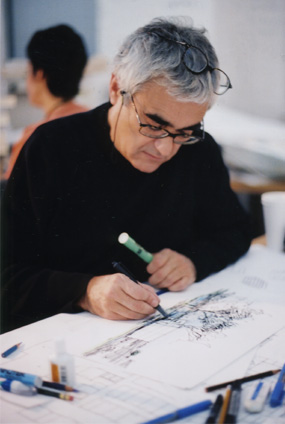
It is amazing to think that Cleveland could have been home to a Sir Norman Foster building instead of the mess of a building that we are going to receive. Foster's work is internationally respected, exerts an intellectual thrust, and pushes the profession and art of building forward. The same, unfortunately, cannot be said of the architect who wears three pairs of glasses simultaneously.
The poster child for self-aggrandizing hacki-ness is the design architect for the Cleveland Museum of Art, Raphael Vinoly. Any architect or architecture student knows that this architect's work is intellectually vacuous, superficially articulate, and shoddily designed + detailed. It was a mistake to the CMA to hire him and the institution should prepare for many troubles ahead, even though they are experiencing cost overruns currently.
Read this article about RVA's latest calamity in Pittsburgh.
It is amazing to think that Cleveland could have been home to a Sir Norman Foster building instead of the mess of a building that we are going to receive. Foster's work is internationally respected, exerts an intellectual thrust, and pushes the profession and art of building forward. The same, unfortunately, cannot be said of the architect who wears three pairs of glasses simultaneously.
Monday, February 05, 2007
Slackin' pretty hard . . . .
So much for resolutions, of course.
It has been a month since my last post. And this one will be short until time allows for more illuminating discourse.
But there are few things to take of note in the past month:
1. Jimmy Dimora is a scummy politician who, through campaign shakedowns, ultimately controls the design of much of our important civic and social architecture, as well as infrastructure. Again, where is our Mayor Daley?
2. How does corruption alter our built environment? Indictments against local retired architects, construction managers, and contractors hint at the level of shoddy design and construction that hinders our regional architecture + infrastructure.
3. The Cleveland Competition is launched.
4. AIA Cleveland announces winners of its Storefront competition.
5. Steve Litt seems to favor saving two examples of 1970's Brutalsim--and hacks at KPF's blob + crystal design for the County Administration Building.
More commentary as BOTC finds more time to write.
It has been a month since my last post. And this one will be short until time allows for more illuminating discourse.
But there are few things to take of note in the past month:
1. Jimmy Dimora is a scummy politician who, through campaign shakedowns, ultimately controls the design of much of our important civic and social architecture, as well as infrastructure. Again, where is our Mayor Daley?
2. How does corruption alter our built environment? Indictments against local retired architects, construction managers, and contractors hint at the level of shoddy design and construction that hinders our regional architecture + infrastructure.
3. The Cleveland Competition is launched.
4. AIA Cleveland announces winners of its Storefront competition.
5. Steve Litt seems to favor saving two examples of 1970's Brutalsim--and hacks at KPF's blob + crystal design for the County Administration Building.
More commentary as BOTC finds more time to write.
Tuesday, January 02, 2007
Cleveland International Book Fair?
BOTC is an avid CSPAN watcher, especially on the weekends when CSPAN2 goes into Book TV mode. You can always come across an interesting author lecturing about their work.
Many of the lectures or discussions televised usually take place at book fairs around the country, like Miami, Washington DC, Austin, etc. There is no reason that there should not be a similar event here in Clevlend. Imagine an entire week of events tied to reading + text, all arrayed around University Circle in the early fall. The concept is quite compelling.
BOTC endorses the founding of such an event. It's mission melds well with other endeavors that are re-shaping our intellectual brownfield landscapes, like Ingenuity, Design City, etc.
Many of the lectures or discussions televised usually take place at book fairs around the country, like Miami, Washington DC, Austin, etc. There is no reason that there should not be a similar event here in Clevlend. Imagine an entire week of events tied to reading + text, all arrayed around University Circle in the early fall. The concept is quite compelling.
BOTC endorses the founding of such an event. It's mission melds well with other endeavors that are re-shaping our intellectual brownfield landscapes, like Ingenuity, Design City, etc.
The Dynamism of the Suburbs
There is a lot of criticism concerning the suburbs and their associated strip malls, parking lots, and unfettered avarice. The criticism and ranting gets old, stale, and boring. BOTC is always on the look-out for alternative perspectives of our suburbs, places that seem to be the site of the greatest economic, political, and culutral dynamism, however "ugly."
Please read this Washington Post story about the changing geographies and identities of some Virginia strip malls.
Please read this Washington Post story about the changing geographies and identities of some Virginia strip malls.
Friday, December 29, 2006
J. Milton Dyer's Coast Guard Station

Local leaders are not consiously demolishing a landmark, like the Cleveland Trust Building; rather, the City of Cleveland is simply ignoring the old Coast Guard Station at the mouth of the Cuyahoga River and allowing the stunning structure to deteriorate.
See a recent Plain Dealer article here.
See past BOTC post + links here.
The building, desinged in a similar, yet toned-down, expressionist manner to Erich Mendelsohn's Einstein Tower, should be saved for many reasons:
1. The Coast Guard Station is one of the few, if only, expressionist buildngs in the region. The melding of European styling with American pragmatism is very unique to this usually architecturally conservative part of the country. Mendelsohn's Park Synagogue in Cleveland Heights also shares a similar formalism.
2. The building was designed by one J. Milton Dyer, a true tragic character in Cleveland architectural history. Dyer was known to intensely design splendid buldings, such as the Coast Guard Station and Cleveland City Hall, and then proceed to go on weeks-long benders in Cleveland's seedier haunts. Out of his office came the greatest Cleveland architectural parntership, Walker + Weeks.
3. The building and site can serve as an anchor in the city's lakefront planning. Although a lakefront plan was proposed (and trashed thoroughly by local and international designers alike), other plans are percolating that should utilize this amazing structure. If Cleveland wants to emerge as a "Design City," a crucial first step must involve the rescuing of this building.
Thursday, December 28, 2006
BOTC: Time's Person of the Year

Time Magazine has designated you, me, all of us, as persons of the year.
Congratulations.
We are transforming media and the dissemination of news, opinion, and information.
We here at BOTC have posted in the past about the role of blogs and the like. We still stand by those sentiments.
Old media is fading away.
Tuesday, December 26, 2006
BOTC New Year's Wishes
Um . . . yeah.
It has been really slow around the BOTC in the past few months. Teaching and working will do that to a blog. Yet nonetheless, I make a resolution to post much more often than the later half of 2006. I know you (all 10 of you) are thrilled.
Since we are entering 2007, I would like to propose a wish list concerning architecture + urbanism in our fair city of Cleveland and Northeast Ohio:
1. The success of the first annual Cleveland Competition.
This competition idea sprung from some young local architects who are seeking to inculcate "design" into the physical, political, and professional fabrics of the city. These young guys are trying to begin marketing Cleveland as "Design City," to a potential international pool of competition entrants. Good for them--they are making strides where the impotent AIA cannot. Look for the publication of the guidelines in January or check in at www.designrag.blogspot.com or www.clevelandcompetition.com.
2. The success of Cleveland design firms.
In order for the "Design City" to happen, local designers must be successful. In order for local architects to be successful and creative, they must have clients who believe in the value of design and the exhilaration of that speculation. Although BOTC has local allegiances, the health of the region and the city will be apparent through the productivity and growth of all our Cleveland practices.
3. The Design Wisdom of Local Politicians.
Cleveland and Cuyahoga County possess some of the most dim-bulb political leaders in the United States. Let's hope that the likes of Commissioner Jimmy Dimora and Mayor Frank Jackson, major design decision makers in the region, become educated about what constitutes successful and awful design. Fellow Democrat, the enlightened tough-guy Mayor Daley of Chicago, understands the potency of good design and urban stewardship. Maybe he should sponsor a seminar our "leaders."
4. The Continued Evolution of KSU CAED.
Kent State's College of Architecture + Environmental Design, or simply Kent Architecture + Design, is engaged in a pedagogical evolution. KSU students are slowly emerging from the object building + site trope and are beginning to engage + re-construe the many contexts + flows + networks + forces that influence the making of structures, infrastructures, and spaces. BOTC hopes that within a few years, Kent will begin to intellectually compete with in-state rivals Ohio State, Miami, and Cincinnati.
5. More design emphasis in the Plain Dealer + local media
As BOTC has stated before, Steve Litt fights an uphill battle as the only critic in town. BOTC wishes for more design criticism from Steve in the upcoming year. But BOTC also wishes for some alternative criticism from the likes of Angle, Pressure, WCPN, Applause, and the Cleveland Free Times. A "Design City" also needs a pestering set of ankle biters for provocation, besides BOTC, Design Rag, TOI, and Improvised Schema.
It has been really slow around the BOTC in the past few months. Teaching and working will do that to a blog. Yet nonetheless, I make a resolution to post much more often than the later half of 2006. I know you (all 10 of you) are thrilled.
Since we are entering 2007, I would like to propose a wish list concerning architecture + urbanism in our fair city of Cleveland and Northeast Ohio:
1. The success of the first annual Cleveland Competition.
This competition idea sprung from some young local architects who are seeking to inculcate "design" into the physical, political, and professional fabrics of the city. These young guys are trying to begin marketing Cleveland as "Design City," to a potential international pool of competition entrants. Good for them--they are making strides where the impotent AIA cannot. Look for the publication of the guidelines in January or check in at www.designrag.blogspot.com or www.clevelandcompetition.com.
2. The success of Cleveland design firms.
In order for the "Design City" to happen, local designers must be successful. In order for local architects to be successful and creative, they must have clients who believe in the value of design and the exhilaration of that speculation. Although BOTC has local allegiances, the health of the region and the city will be apparent through the productivity and growth of all our Cleveland practices.
3. The Design Wisdom of Local Politicians.
Cleveland and Cuyahoga County possess some of the most dim-bulb political leaders in the United States. Let's hope that the likes of Commissioner Jimmy Dimora and Mayor Frank Jackson, major design decision makers in the region, become educated about what constitutes successful and awful design. Fellow Democrat, the enlightened tough-guy Mayor Daley of Chicago, understands the potency of good design and urban stewardship. Maybe he should sponsor a seminar our "leaders."
4. The Continued Evolution of KSU CAED.
Kent State's College of Architecture + Environmental Design, or simply Kent Architecture + Design, is engaged in a pedagogical evolution. KSU students are slowly emerging from the object building + site trope and are beginning to engage + re-construe the many contexts + flows + networks + forces that influence the making of structures, infrastructures, and spaces. BOTC hopes that within a few years, Kent will begin to intellectually compete with in-state rivals Ohio State, Miami, and Cincinnati.
5. More design emphasis in the Plain Dealer + local media
As BOTC has stated before, Steve Litt fights an uphill battle as the only critic in town. BOTC wishes for more design criticism from Steve in the upcoming year. But BOTC also wishes for some alternative criticism from the likes of Angle, Pressure, WCPN, Applause, and the Cleveland Free Times. A "Design City" also needs a pestering set of ankle biters for provocation, besides BOTC, Design Rag, TOI, and Improvised Schema.
Tuesday, December 05, 2006
Since the last post . . . .
Posting has been slow recently for no particular reason, like the Browns offense. But since the Browns won on Sunday and will surely demolish the Steelers on Thursday night, I decided to post.
Recent architectural happenings in Cleveland to keep your eye on:
1. AIA Cleveland sponsored a competition for a new awning for the chapter offices on Huron--the boards were due on Friday to Cleveland Public Art. Word is that participation was extremely low. Interestingly enough, no architects will be on the jury--just leaders from many arts institutions around town, like CMA, MOCA, and Cleveland Public Art. It will be interesting which entries will be favored.
2. Public Square Studio at the Kent State's downtown CUDC will be presenting their work to a distinguished jury on Friday (8 December @ 2PM), including architects, professors, and landscape urbanists from New York, Toronto, Cleveland and Chicago. BOTC looks forward to the discussions not only about speculations about Public Square, but also the future constitution of American common space. Student speculations have engaged the development and deployment of spectacle, intellectual grazing fields, and intensity-density derived flow armatures and programme displacements.
3. OC (Ohio City) Studio at Kent State CAED will be presenting their speculations to a distinguished jury on Friday also. Students engaged with the rich contexts of Ohio City, proposed a master planning of the entire neighborhood, and then have developed parcels and programmes.
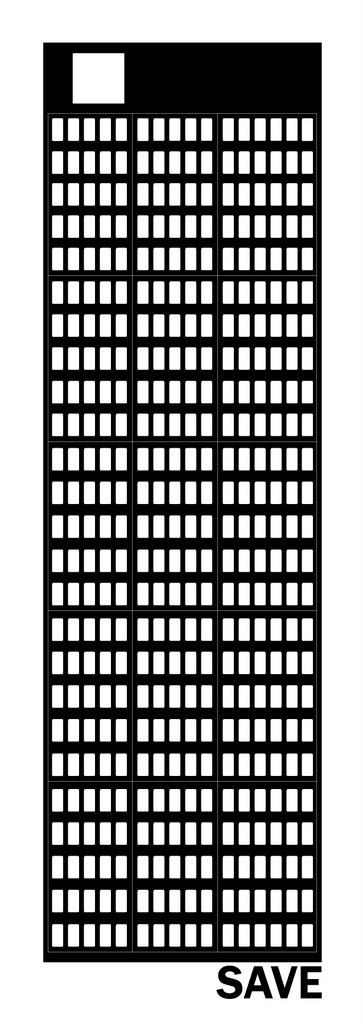
4. TOI studio has speculated about the re-use of the hundreds of pre-cast panels from Marcel Breuer's Cleveland Trust Building. The building, which will be demolished because the county administrators do not like so-called "ugly" architecture is slated to be demolished in the near term. Cleveland architects should advocate for the salvaging of these panels for alternative uses.
5. Foreign Office Architects, in association with Westlake Reed Leskosky, will be designing the new Cleveland MOCA. BOTC looks forward to seeing the development and design process of such a progressive international practice working within the very provincial quarters of our fair City.
6. Coop Himmelblau's Akron Art Museum will be opening soon in downtown Akron. Let's hope that the crew from FOA spends more time in the area, unlike the Coop boys who were rountinely no-shows for Northeast Ohio cultural events. The Akron Art Museum is likely to be criticized as mere empty-formalism, albeit structurally spectacular. BOTC thinks FOA will present a more didactic architecture.
That's it for now.
Go Browns. Beat Pittsburgh, which like the University of Michigan, is a bastion of evil.
Recent architectural happenings in Cleveland to keep your eye on:
1. AIA Cleveland sponsored a competition for a new awning for the chapter offices on Huron--the boards were due on Friday to Cleveland Public Art. Word is that participation was extremely low. Interestingly enough, no architects will be on the jury--just leaders from many arts institutions around town, like CMA, MOCA, and Cleveland Public Art. It will be interesting which entries will be favored.
2. Public Square Studio at the Kent State's downtown CUDC will be presenting their work to a distinguished jury on Friday (8 December @ 2PM), including architects, professors, and landscape urbanists from New York, Toronto, Cleveland and Chicago. BOTC looks forward to the discussions not only about speculations about Public Square, but also the future constitution of American common space. Student speculations have engaged the development and deployment of spectacle, intellectual grazing fields, and intensity-density derived flow armatures and programme displacements.
3. OC (Ohio City) Studio at Kent State CAED will be presenting their speculations to a distinguished jury on Friday also. Students engaged with the rich contexts of Ohio City, proposed a master planning of the entire neighborhood, and then have developed parcels and programmes.
4. TOI studio has speculated about the re-use of the hundreds of pre-cast panels from Marcel Breuer's Cleveland Trust Building. The building, which will be demolished because the county administrators do not like so-called "ugly" architecture is slated to be demolished in the near term. Cleveland architects should advocate for the salvaging of these panels for alternative uses.
5. Foreign Office Architects, in association with Westlake Reed Leskosky, will be designing the new Cleveland MOCA. BOTC looks forward to seeing the development and design process of such a progressive international practice working within the very provincial quarters of our fair City.
6. Coop Himmelblau's Akron Art Museum will be opening soon in downtown Akron. Let's hope that the crew from FOA spends more time in the area, unlike the Coop boys who were rountinely no-shows for Northeast Ohio cultural events. The Akron Art Museum is likely to be criticized as mere empty-formalism, albeit structurally spectacular. BOTC thinks FOA will present a more didactic architecture.
That's it for now.
Go Browns. Beat Pittsburgh, which like the University of Michigan, is a bastion of evil.
Tuesday, November 14, 2006
Thursday, October 26, 2006
An Intelligent Public Square
Since May, this blog, along with some other local blogs, have been discussing the present condition and the future constitution of Cleveland’s Public Square. You can read our past posts here, here, and here. Clearly, some consequential and progressive re-consideration must be undertaken to improve the region’s most recognizable public space.
BOTC now hears that several organizations (Downtown Cleveland Alliance, College 360, etc.) are indeed looking to spearhead a campaign to revitalize Cleveland’s most recognizable public space. We are happy to hear that significant studies will be executed that hopefully will inform the re-design of the area. These “private” organizations, unlike government entities like the City, County, or Regional Transit Authority, seem to possess a charged, coherent vision, unencumbered with constituent political baggage or incompetent political narcissism.
However, we implore the potential stake-holding organizations sponsor an international competition for the Square. Similar international competitions occur every year for cities across the globe, but also in our regional backyard. Although BOTC routinely chastises local institutions for running to the coasts to find their architects, we now suggest this international competition vehicle in order to solicit a broad scope of design notions. The competition will not only accrue global ideas but also place Cleveland at the forefront of international design attention.
Public Square needs to become an “intelligent” space, unlike any other public space in the United States. What is an “intelligent" space? What are other intelligent spaces + fields in the region? Burnham's Mall? Others? Look for future speculations from Improvised Schema, Design Rag, Public Square Studio, and BOTC.
BOTC now hears that several organizations (Downtown Cleveland Alliance, College 360, etc.) are indeed looking to spearhead a campaign to revitalize Cleveland’s most recognizable public space. We are happy to hear that significant studies will be executed that hopefully will inform the re-design of the area. These “private” organizations, unlike government entities like the City, County, or Regional Transit Authority, seem to possess a charged, coherent vision, unencumbered with constituent political baggage or incompetent political narcissism.
However, we implore the potential stake-holding organizations sponsor an international competition for the Square. Similar international competitions occur every year for cities across the globe, but also in our regional backyard. Although BOTC routinely chastises local institutions for running to the coasts to find their architects, we now suggest this international competition vehicle in order to solicit a broad scope of design notions. The competition will not only accrue global ideas but also place Cleveland at the forefront of international design attention.
Public Square needs to become an “intelligent” space, unlike any other public space in the United States. What is an “intelligent" space? What are other intelligent spaces + fields in the region? Burnham's Mall? Others? Look for future speculations from Improvised Schema, Design Rag, Public Square Studio, and BOTC.
Thursday, October 05, 2006
More bad design decisions by a Cleveland institution . . .
It has been reported that Charles Gwathmey is now back in the good graces of Cleveland State and will be working on the new student center.
But we should all be very afraid of the fromer New York 5 member. Look here to see what a travesty he is planning for the Yale Art + Architecture building addition, a cardinal building of mid-century American Modernism. If he is putting forth his best effort at Yale with that awful design, what will Cleveland State get? More of the same, I susupect.
But we should all be very afraid of the fromer New York 5 member. Look here to see what a travesty he is planning for the Yale Art + Architecture building addition, a cardinal building of mid-century American Modernism. If he is putting forth his best effort at Yale with that awful design, what will Cleveland State get? More of the same, I susupect.
Politics or Progress?
The Cuyahoga County Commissioners have picked their architect for the new administration complex.
Unfortunately, political connections still trump talent and credentials in this one-party town.
Unfortunately, political connections still trump talent and credentials in this one-party town.
Tuesday, September 26, 2006
Too Negative or Rightfully Critical?
BOTC has been called out for being too negative by Rockitecture, another Cleveland architecture blog via Florence. It seems that we may rough the quarterback up too much. BOTC disagrees.
I would argue that BOTC, Improvised Schema, and Design Rag are not being overly negative. Instead we are critically questioning much of the mediocre design and regressive atmosphere that fosters that design in our region. We are offering informed criticisms of projects that are otherwise praised by major media outlets or institutions that claim to be the intellectual stewards of the city.
The four above mentioned blogs, including Rockitecture, do serve a purpose. Steve Litt, who BOTC believes does fight the good fight by trying to advance architectural dialogue in the collective consciousness, is not educated as an architect, but rather in Art History. The many authors of the previously mentioned blogs are educated as architects and all currently practice. Because of our professional orientation and our training, we can offer something different to the discussion. And that is what we will continue to do.
Knowing several of the authors, BOTC is comfortable asserting that we all believe in strengthening the city though competent and potent design. However, if we see abominations of architecture or urban design being flung upon the masses under the banner of "contextualism" or "populism" or any other false contrivance, we will pounce and criticize. Bad design can inflict more damage on a city that just mere latent negativity.
I would argue that BOTC, Improvised Schema, and Design Rag are not being overly negative. Instead we are critically questioning much of the mediocre design and regressive atmosphere that fosters that design in our region. We are offering informed criticisms of projects that are otherwise praised by major media outlets or institutions that claim to be the intellectual stewards of the city.
The four above mentioned blogs, including Rockitecture, do serve a purpose. Steve Litt, who BOTC believes does fight the good fight by trying to advance architectural dialogue in the collective consciousness, is not educated as an architect, but rather in Art History. The many authors of the previously mentioned blogs are educated as architects and all currently practice. Because of our professional orientation and our training, we can offer something different to the discussion. And that is what we will continue to do.
Knowing several of the authors, BOTC is comfortable asserting that we all believe in strengthening the city though competent and potent design. However, if we see abominations of architecture or urban design being flung upon the masses under the banner of "contextualism" or "populism" or any other false contrivance, we will pounce and criticize. Bad design can inflict more damage on a city that just mere latent negativity.
Subscribe to:
Posts (Atom)