
BOTC is an avid CSPAN watcher, especially on the weekends when CSPAN2 goes into Book TV mode. You can always come across an interesting author lecturing about their work.
Many of the lectures or discussions televised usually take place at book fairs around the country, like Miami, Washington DC, Austin, etc. There is no reason that there should not be a similar event here in Clevlend. Imagine an entire week of events tied to reading + text, all arrayed around University Circle in the early fall. The concept is quite compelling.
BOTC endorses the founding of such an event. It's mission melds well with other endeavors that are re-shaping our intellectual brownfield landscapes, like Ingenuity, Design City, etc.
Tuesday, January 02, 2007

The Dynamism of the Suburbs
There is a lot of criticism concerning the suburbs and their associated strip malls, parking lots, and unfettered avarice. The criticism and ranting gets old, stale, and boring. BOTC is always on the look-out for alternative perspectives of our suburbs, places that seem to be the site of the greatest economic, political, and culutral dynamism, however "ugly."
Please read this Washington Post story about the changing geographies and identities of some Virginia strip malls.
Please read this Washington Post story about the changing geographies and identities of some Virginia strip malls.
Friday, December 29, 2006
J. Milton Dyer's Coast Guard Station

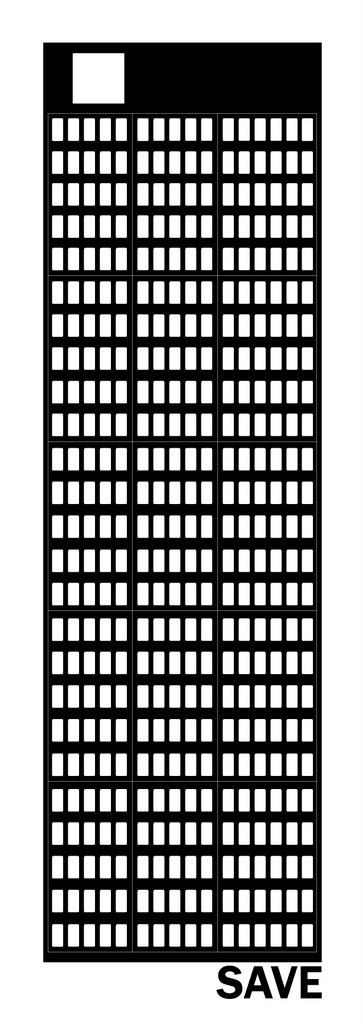
Local leaders are not consiously demolishing a landmark, like the Cleveland Trust Building; rather, the City of Cleveland is simply ignoring the old Coast Guard Station at the mouth of the Cuyahoga River and allowing the stunning structure to deteriorate.
See a recent Plain Dealer article here.
See past BOTC post + links here.
The building, desinged in a similar, yet toned-down, expressionist manner to Erich Mendelsohn's Einstein Tower, should be saved for many reasons:
1. The Coast Guard Station is one of the few, if only, expressionist buildngs in the region. The melding of European styling with American pragmatism is very unique to this usually architecturally conservative part of the country. Mendelsohn's Park Synagogue in Cleveland Heights also shares a similar formalism.
2. The building was designed by one J. Milton Dyer, a true tragic character in Cleveland architectural history. Dyer was known to intensely design splendid buldings, such as the Coast Guard Station and Cleveland City Hall, and then proceed to go on weeks-long benders in Cleveland's seedier haunts. Out of his office came the greatest Cleveland architectural parntership, Walker + Weeks.
3. The building and site can serve as an anchor in the city's lakefront planning. Although a lakefront plan was proposed (and trashed thoroughly by local and international designers alike), other plans are percolating that should utilize this amazing structure. If Cleveland wants to emerge as a "Design City," a crucial first step must involve the rescuing of this building.
Thursday, December 28, 2006
BOTC: Time's Person of the Year

Time Magazine has designated you, me, all of us, as persons of the year.
Congratulations.
We are transforming media and the dissemination of news, opinion, and information.
We here at BOTC have posted in the past about the role of blogs and the like. We still stand by those sentiments.
Old media is fading away.
Tuesday, December 26, 2006
BOTC New Year's Wishes
Um . . . yeah.
It has been really slow around the BOTC in the past few months. Teaching and working will do that to a blog. Yet nonetheless, I make a resolution to post much more often than the later half of 2006. I know you (all 10 of you) are thrilled.
Since we are entering 2007, I would like to propose a wish list concerning architecture + urbanism in our fair city of Cleveland and Northeast Ohio:
1. The success of the first annual Cleveland Competition.
This competition idea sprung from some young local architects who are seeking to inculcate "design" into the physical, political, and professional fabrics of the city. These young guys are trying to begin marketing Cleveland as "Design City," to a potential international pool of competition entrants. Good for them--they are making strides where the impotent AIA cannot. Look for the publication of the guidelines in January or check in at www.designrag.blogspot.com or www.clevelandcompetition.com.
2. The success of Cleveland design firms.
In order for the "Design City" to happen, local designers must be successful. In order for local architects to be successful and creative, they must have clients who believe in the value of design and the exhilaration of that speculation. Although BOTC has local allegiances, the health of the region and the city will be apparent through the productivity and growth of all our Cleveland practices.
3. The Design Wisdom of Local Politicians.
Cleveland and Cuyahoga County possess some of the most dim-bulb political leaders in the United States. Let's hope that the likes of Commissioner Jimmy Dimora and Mayor Frank Jackson, major design decision makers in the region, become educated about what constitutes successful and awful design. Fellow Democrat, the enlightened tough-guy Mayor Daley of Chicago, understands the potency of good design and urban stewardship. Maybe he should sponsor a seminar our "leaders."
4. The Continued Evolution of KSU CAED.
Kent State's College of Architecture + Environmental Design, or simply Kent Architecture + Design, is engaged in a pedagogical evolution. KSU students are slowly emerging from the object building + site trope and are beginning to engage + re-construe the many contexts + flows + networks + forces that influence the making of structures, infrastructures, and spaces. BOTC hopes that within a few years, Kent will begin to intellectually compete with in-state rivals Ohio State, Miami, and Cincinnati.
5. More design emphasis in the Plain Dealer + local media
As BOTC has stated before, Steve Litt fights an uphill battle as the only critic in town. BOTC wishes for more design criticism from Steve in the upcoming year. But BOTC also wishes for some alternative criticism from the likes of Angle, Pressure, WCPN, Applause, and the Cleveland Free Times. A "Design City" also needs a pestering set of ankle biters for provocation, besides BOTC, Design Rag, TOI, and Improvised Schema.
It has been really slow around the BOTC in the past few months. Teaching and working will do that to a blog. Yet nonetheless, I make a resolution to post much more often than the later half of 2006. I know you (all 10 of you) are thrilled.
Since we are entering 2007, I would like to propose a wish list concerning architecture + urbanism in our fair city of Cleveland and Northeast Ohio:
1. The success of the first annual Cleveland Competition.
This competition idea sprung from some young local architects who are seeking to inculcate "design" into the physical, political, and professional fabrics of the city. These young guys are trying to begin marketing Cleveland as "Design City," to a potential international pool of competition entrants. Good for them--they are making strides where the impotent AIA cannot. Look for the publication of the guidelines in January or check in at www.designrag.blogspot.com or www.clevelandcompetition.com.
2. The success of Cleveland design firms.
In order for the "Design City" to happen, local designers must be successful. In order for local architects to be successful and creative, they must have clients who believe in the value of design and the exhilaration of that speculation. Although BOTC has local allegiances, the health of the region and the city will be apparent through the productivity and growth of all our Cleveland practices.
3. The Design Wisdom of Local Politicians.
Cleveland and Cuyahoga County possess some of the most dim-bulb political leaders in the United States. Let's hope that the likes of Commissioner Jimmy Dimora and Mayor Frank Jackson, major design decision makers in the region, become educated about what constitutes successful and awful design. Fellow Democrat, the enlightened tough-guy Mayor Daley of Chicago, understands the potency of good design and urban stewardship. Maybe he should sponsor a seminar our "leaders."
4. The Continued Evolution of KSU CAED.
Kent State's College of Architecture + Environmental Design, or simply Kent Architecture + Design, is engaged in a pedagogical evolution. KSU students are slowly emerging from the object building + site trope and are beginning to engage + re-construe the many contexts + flows + networks + forces that influence the making of structures, infrastructures, and spaces. BOTC hopes that within a few years, Kent will begin to intellectually compete with in-state rivals Ohio State, Miami, and Cincinnati.
5. More design emphasis in the Plain Dealer + local media
As BOTC has stated before, Steve Litt fights an uphill battle as the only critic in town. BOTC wishes for more design criticism from Steve in the upcoming year. But BOTC also wishes for some alternative criticism from the likes of Angle, Pressure, WCPN, Applause, and the Cleveland Free Times. A "Design City" also needs a pestering set of ankle biters for provocation, besides BOTC, Design Rag, TOI, and Improvised Schema.
Tuesday, December 05, 2006
Since the last post . . . .
Posting has been slow recently for no particular reason, like the Browns offense. But since the Browns won on Sunday and will surely demolish the Steelers on Thursday night, I decided to post.
Recent architectural happenings in Cleveland to keep your eye on:
1. AIA Cleveland sponsored a competition for a new awning for the chapter offices on Huron--the boards were due on Friday to Cleveland Public Art. Word is that participation was extremely low. Interestingly enough, no architects will be on the jury--just leaders from many arts institutions around town, like CMA, MOCA, and Cleveland Public Art. It will be interesting which entries will be favored.
2. Public Square Studio at the Kent State's downtown CUDC will be presenting their work to a distinguished jury on Friday (8 December @ 2PM), including architects, professors, and landscape urbanists from New York, Toronto, Cleveland and Chicago. BOTC looks forward to the discussions not only about speculations about Public Square, but also the future constitution of American common space. Student speculations have engaged the development and deployment of spectacle, intellectual grazing fields, and intensity-density derived flow armatures and programme displacements.
3. OC (Ohio City) Studio at Kent State CAED will be presenting their speculations to a distinguished jury on Friday also. Students engaged with the rich contexts of Ohio City, proposed a master planning of the entire neighborhood, and then have developed parcels and programmes.
4. TOI studio has speculated about the re-use of the hundreds of pre-cast panels from Marcel Breuer's Cleveland Trust Building. The building, which will be demolished because the county administrators do not like so-called "ugly" architecture is slated to be demolished in the near term. Cleveland architects should advocate for the salvaging of these panels for alternative uses.
5. Foreign Office Architects, in association with Westlake Reed Leskosky, will be designing the new Cleveland MOCA. BOTC looks forward to seeing the development and design process of such a progressive international practice working within the very provincial quarters of our fair City.
6. Coop Himmelblau's Akron Art Museum will be opening soon in downtown Akron. Let's hope that the crew from FOA spends more time in the area, unlike the Coop boys who were rountinely no-shows for Northeast Ohio cultural events. The Akron Art Museum is likely to be criticized as mere empty-formalism, albeit structurally spectacular. BOTC thinks FOA will present a more didactic architecture.
That's it for now.
Go Browns. Beat Pittsburgh, which like the University of Michigan, is a bastion of evil.
Recent architectural happenings in Cleveland to keep your eye on:
1. AIA Cleveland sponsored a competition for a new awning for the chapter offices on Huron--the boards were due on Friday to Cleveland Public Art. Word is that participation was extremely low. Interestingly enough, no architects will be on the jury--just leaders from many arts institutions around town, like CMA, MOCA, and Cleveland Public Art. It will be interesting which entries will be favored.
2. Public Square Studio at the Kent State's downtown CUDC will be presenting their work to a distinguished jury on Friday (8 December @ 2PM), including architects, professors, and landscape urbanists from New York, Toronto, Cleveland and Chicago. BOTC looks forward to the discussions not only about speculations about Public Square, but also the future constitution of American common space. Student speculations have engaged the development and deployment of spectacle, intellectual grazing fields, and intensity-density derived flow armatures and programme displacements.
3. OC (Ohio City) Studio at Kent State CAED will be presenting their speculations to a distinguished jury on Friday also. Students engaged with the rich contexts of Ohio City, proposed a master planning of the entire neighborhood, and then have developed parcels and programmes.
4. TOI studio has speculated about the re-use of the hundreds of pre-cast panels from Marcel Breuer's Cleveland Trust Building. The building, which will be demolished because the county administrators do not like so-called "ugly" architecture is slated to be demolished in the near term. Cleveland architects should advocate for the salvaging of these panels for alternative uses.
5. Foreign Office Architects, in association with Westlake Reed Leskosky, will be designing the new Cleveland MOCA. BOTC looks forward to seeing the development and design process of such a progressive international practice working within the very provincial quarters of our fair City.
6. Coop Himmelblau's Akron Art Museum will be opening soon in downtown Akron. Let's hope that the crew from FOA spends more time in the area, unlike the Coop boys who were rountinely no-shows for Northeast Ohio cultural events. The Akron Art Museum is likely to be criticized as mere empty-formalism, albeit structurally spectacular. BOTC thinks FOA will present a more didactic architecture.
That's it for now.
Go Browns. Beat Pittsburgh, which like the University of Michigan, is a bastion of evil.
Tuesday, November 14, 2006
Thursday, October 26, 2006
An Intelligent Public Square
Since May, this blog, along with some other local blogs, have been discussing the present condition and the future constitution of Cleveland’s Public Square. You can read our past posts here, here, and here. Clearly, some consequential and progressive re-consideration must be undertaken to improve the region’s most recognizable public space.
BOTC now hears that several organizations (Downtown Cleveland Alliance, College 360, etc.) are indeed looking to spearhead a campaign to revitalize Cleveland’s most recognizable public space. We are happy to hear that significant studies will be executed that hopefully will inform the re-design of the area. These “private” organizations, unlike government entities like the City, County, or Regional Transit Authority, seem to possess a charged, coherent vision, unencumbered with constituent political baggage or incompetent political narcissism.
However, we implore the potential stake-holding organizations sponsor an international competition for the Square. Similar international competitions occur every year for cities across the globe, but also in our regional backyard. Although BOTC routinely chastises local institutions for running to the coasts to find their architects, we now suggest this international competition vehicle in order to solicit a broad scope of design notions. The competition will not only accrue global ideas but also place Cleveland at the forefront of international design attention.
Public Square needs to become an “intelligent” space, unlike any other public space in the United States. What is an “intelligent" space? What are other intelligent spaces + fields in the region? Burnham's Mall? Others? Look for future speculations from Improvised Schema, Design Rag, Public Square Studio, and BOTC.
BOTC now hears that several organizations (Downtown Cleveland Alliance, College 360, etc.) are indeed looking to spearhead a campaign to revitalize Cleveland’s most recognizable public space. We are happy to hear that significant studies will be executed that hopefully will inform the re-design of the area. These “private” organizations, unlike government entities like the City, County, or Regional Transit Authority, seem to possess a charged, coherent vision, unencumbered with constituent political baggage or incompetent political narcissism.
However, we implore the potential stake-holding organizations sponsor an international competition for the Square. Similar international competitions occur every year for cities across the globe, but also in our regional backyard. Although BOTC routinely chastises local institutions for running to the coasts to find their architects, we now suggest this international competition vehicle in order to solicit a broad scope of design notions. The competition will not only accrue global ideas but also place Cleveland at the forefront of international design attention.
Public Square needs to become an “intelligent” space, unlike any other public space in the United States. What is an “intelligent" space? What are other intelligent spaces + fields in the region? Burnham's Mall? Others? Look for future speculations from Improvised Schema, Design Rag, Public Square Studio, and BOTC.
Thursday, October 05, 2006
More bad design decisions by a Cleveland institution . . .
It has been reported that Charles Gwathmey is now back in the good graces of Cleveland State and will be working on the new student center.
But we should all be very afraid of the fromer New York 5 member. Look here to see what a travesty he is planning for the Yale Art + Architecture building addition, a cardinal building of mid-century American Modernism. If he is putting forth his best effort at Yale with that awful design, what will Cleveland State get? More of the same, I susupect.
But we should all be very afraid of the fromer New York 5 member. Look here to see what a travesty he is planning for the Yale Art + Architecture building addition, a cardinal building of mid-century American Modernism. If he is putting forth his best effort at Yale with that awful design, what will Cleveland State get? More of the same, I susupect.
Politics or Progress?
The Cuyahoga County Commissioners have picked their architect for the new administration complex.
Unfortunately, political connections still trump talent and credentials in this one-party town.
Unfortunately, political connections still trump talent and credentials in this one-party town.
Tuesday, September 26, 2006
Too Negative or Rightfully Critical?
BOTC has been called out for being too negative by Rockitecture, another Cleveland architecture blog via Florence. It seems that we may rough the quarterback up too much. BOTC disagrees.
I would argue that BOTC, Improvised Schema, and Design Rag are not being overly negative. Instead we are critically questioning much of the mediocre design and regressive atmosphere that fosters that design in our region. We are offering informed criticisms of projects that are otherwise praised by major media outlets or institutions that claim to be the intellectual stewards of the city.
The four above mentioned blogs, including Rockitecture, do serve a purpose. Steve Litt, who BOTC believes does fight the good fight by trying to advance architectural dialogue in the collective consciousness, is not educated as an architect, but rather in Art History. The many authors of the previously mentioned blogs are educated as architects and all currently practice. Because of our professional orientation and our training, we can offer something different to the discussion. And that is what we will continue to do.
Knowing several of the authors, BOTC is comfortable asserting that we all believe in strengthening the city though competent and potent design. However, if we see abominations of architecture or urban design being flung upon the masses under the banner of "contextualism" or "populism" or any other false contrivance, we will pounce and criticize. Bad design can inflict more damage on a city that just mere latent negativity.
I would argue that BOTC, Improvised Schema, and Design Rag are not being overly negative. Instead we are critically questioning much of the mediocre design and regressive atmosphere that fosters that design in our region. We are offering informed criticisms of projects that are otherwise praised by major media outlets or institutions that claim to be the intellectual stewards of the city.
The four above mentioned blogs, including Rockitecture, do serve a purpose. Steve Litt, who BOTC believes does fight the good fight by trying to advance architectural dialogue in the collective consciousness, is not educated as an architect, but rather in Art History. The many authors of the previously mentioned blogs are educated as architects and all currently practice. Because of our professional orientation and our training, we can offer something different to the discussion. And that is what we will continue to do.
Knowing several of the authors, BOTC is comfortable asserting that we all believe in strengthening the city though competent and potent design. However, if we see abominations of architecture or urban design being flung upon the masses under the banner of "contextualism" or "populism" or any other false contrivance, we will pounce and criticize. Bad design can inflict more damage on a city that just mere latent negativity.
Monday, September 25, 2006
Public Square Studio continues . . .
The Fall 2006 Gradaute Design Studio at Kent's State's CUDC is completing the initial precedent analysis and testings of precedental tactics on Public Square.
Please check their progress at the Public Square Studio blog.
Design proposals will begin to emerge over the next three weeks.
Please check their progress at the Public Square Studio blog.
Design proposals will begin to emerge over the next three weeks.
Wednesday, August 30, 2006
Public Square Speculations
The Fall Semester Kent State CUDC Graduate studio will be speculating about the future of Cleveland's Public Square.
The studio will be posting / blogging about their research and design work regularly throughout the fall. You can follow the work here.
Please stay appraised of emerging alternative renderings of Cleveland's most recognizable public space.
The studio will be posting / blogging about their research and design work regularly throughout the fall. You can follow the work here.
Please stay appraised of emerging alternative renderings of Cleveland's most recognizable public space.
Saturday, August 12, 2006
Cape May, New Jersey
BOTC took a little vacation time last week and visited Cape May, New Jersey, a Victorian beach town at the southern tip of state. We had an enjoyable time—the future Mrs. Doctor enjoyed the beaches, while I enjoyed the resort town landscape and geography.
Resort + vacation towns are “urban” anomalies, unlike the typical American urban or suburban conurbations. A town is in constant flux, shuffling new populations of tourists and vacationers every few days. A resort community may maintain, sustain, and promote an atmosphere. Animated public spaces possessing all the accruements of a pedestrian environment are filled with people day and night. Vehicular traffic is limited, as well as asphalt parking lots.
Cape May is no different. Tourists, like us, come in for a few days, become quasi-citizens use the city and beaches, and then leave. The town tries to maintain a Victorian aesthetic presence with many of its beautiful bed and breakfasts, cottages, and vacation homes (“Idustri-victorian” architect Frank Furness designed buildings in town). Houses are grouped tightly together on narrow tree-lined streets with flagstone sidewalks. The ocean-front avenue and the Washington Street Pedestrian Mall are engaging public spaces, full of people, activities, pleasant aromas, shading vegetation. Cape May is a pleasant place.
But why can we not transfer such conditions back to our everyday lives back in the suburbs of Cleveland? This is an old and tired question that always devolves into the typical clichéd answers, political disagreements, and arguments. I cannot assert any answers or new solutions myself.
Yet quick trips to these urban anomalies always refresh the inner-debate between desires for a new pleasant populist (sub)urbanism and a more aggressive, progressive, and density-driven urbanism.
Resort + vacation towns are “urban” anomalies, unlike the typical American urban or suburban conurbations. A town is in constant flux, shuffling new populations of tourists and vacationers every few days. A resort community may maintain, sustain, and promote an atmosphere. Animated public spaces possessing all the accruements of a pedestrian environment are filled with people day and night. Vehicular traffic is limited, as well as asphalt parking lots.
Cape May is no different. Tourists, like us, come in for a few days, become quasi-citizens use the city and beaches, and then leave. The town tries to maintain a Victorian aesthetic presence with many of its beautiful bed and breakfasts, cottages, and vacation homes (“Idustri-victorian” architect Frank Furness designed buildings in town). Houses are grouped tightly together on narrow tree-lined streets with flagstone sidewalks. The ocean-front avenue and the Washington Street Pedestrian Mall are engaging public spaces, full of people, activities, pleasant aromas, shading vegetation. Cape May is a pleasant place.
But why can we not transfer such conditions back to our everyday lives back in the suburbs of Cleveland? This is an old and tired question that always devolves into the typical clichéd answers, political disagreements, and arguments. I cannot assert any answers or new solutions myself.
Yet quick trips to these urban anomalies always refresh the inner-debate between desires for a new pleasant populist (sub)urbanism and a more aggressive, progressive, and density-driven urbanism.
Thursday, August 03, 2006
It's freaking hot . . . .random thoughts
BOTC has been busy with other things in life, like studying for the architectural registration exam and trying to avoid heat stroke.
Books that BOTC is trying to find time to read:
Recombinant Urbansim
The Average American
American Green
Symbolic Essence (essays by William Jordy)
Society of the Spectacle
Maybe I will write a response to all this literature.
Here is link to cross-continental yard sales that will be happening in the near future.
The Browns new face masks are bad-ass.
Books that BOTC is trying to find time to read:
Recombinant Urbansim
The Average American
American Green
Symbolic Essence (essays by William Jordy)
Society of the Spectacle
Maybe I will write a response to all this literature.
Here is link to cross-continental yard sales that will be happening in the near future.
The Browns new face masks are bad-ass.
Thursday, July 27, 2006
New Orleans Metrostudio
I would encourage everyone to vote for BOTC's friend and classmate, Ken Gowland of Metrostudio, and his submission for the New Orleans Sustainable Design Competittion.
Ken and his family withstood Katrina's sacking of the city, the evacuation, and now is taking part in the vital re-building of the city.
Ken and his family withstood Katrina's sacking of the city, the evacuation, and now is taking part in the vital re-building of the city.
Thursday, July 20, 2006
A Delayed Campus-Making Tactic
How do you transform a loosely grouped ensemble of medical buildings into a "campus"?
Commandeer a major piece of city and federal infrastructure and transform the street, Euclid Avenue, into a organizational pedestrian spine. That is exactly what the Cleveland Clinic is studying and proposing.
The Clinic is a monster institution, possessing blocks and blocks of inner city Cleveland, abutting University Circle. The Clinic is the largest institution in the city and adds luster to the rusting hulk of this post-industrial region. To say the least, the hospital maintains a muscular presence.
Many were astounded by the brashness and scope of the plan, which would alter the urban landscape for over 20 city blocks. But this is in by no way a new tactic for institutions seeking to engender or further enhance the notion of "campus". Penn State turned a campus and State College Street into a Jefferson-inspired academic mall, a space now considered the main organizational element. Yale University has transformed New Haven streets into University campus walks, connecting Old Campus to Cross Campus and the Sterling Memorial Library. Case Western Reserve University has morphed alleys into student thoroughfares. And there are many other examples that escape me.
The scale of the endeavor is intriguing, as well as the retroactive urban design tactic that Peter Walker and the Clinic are employing. The deployment of a organizational element, a massive pedestrian mall, after over 90 years of campus development, overturns the normative methods of campus design. Instead of inducing the instant campus, the proposed plan suggests the acquisition of "campus" can be attained many decades after the planning and building begins.
Although the Clinic may be inciting a political firestorm, the methods and tactics that Peter Walker is employing are nonetheless interesting and deserve further critical scrutiny.
For more on the Clinic plan see Design Rag's take.
Commandeer a major piece of city and federal infrastructure and transform the street, Euclid Avenue, into a organizational pedestrian spine. That is exactly what the Cleveland Clinic is studying and proposing.
The Clinic is a monster institution, possessing blocks and blocks of inner city Cleveland, abutting University Circle. The Clinic is the largest institution in the city and adds luster to the rusting hulk of this post-industrial region. To say the least, the hospital maintains a muscular presence.
Many were astounded by the brashness and scope of the plan, which would alter the urban landscape for over 20 city blocks. But this is in by no way a new tactic for institutions seeking to engender or further enhance the notion of "campus". Penn State turned a campus and State College Street into a Jefferson-inspired academic mall, a space now considered the main organizational element. Yale University has transformed New Haven streets into University campus walks, connecting Old Campus to Cross Campus and the Sterling Memorial Library. Case Western Reserve University has morphed alleys into student thoroughfares. And there are many other examples that escape me.
The scale of the endeavor is intriguing, as well as the retroactive urban design tactic that Peter Walker and the Clinic are employing. The deployment of a organizational element, a massive pedestrian mall, after over 90 years of campus development, overturns the normative methods of campus design. Instead of inducing the instant campus, the proposed plan suggests the acquisition of "campus" can be attained many decades after the planning and building begins.
Although the Clinic may be inciting a political firestorm, the methods and tactics that Peter Walker is employing are nonetheless interesting and deserve further critical scrutiny.
For more on the Clinic plan see Design Rag's take.
Wednesday, July 12, 2006
Thanks for the interest, now get out of the way
This week's Crain's Cleveland Business publishes a letter to the editor concerning the potential changes with Cleveland's Public Sqaure (subscription needed). The authors--Mayor Debbie Sutherland (Bay Village), Martin Sweeney (Cleveland City Council), Andrew Roth (Notre Dame College)--all members of the Leadership Cleveland Class of 2004, take credit for the original design visions for Public Square.
BOTC applauds their recognition of the restoration of Public Square as a transformative agent. However, while they advocate for more unified green space and the re-routing of Ontario and Superior, they botched everything else.
These potential decision and policy makers need to engage in an all encompassing design process that can flesh-out all possible solutions. A progressive vision can be quickly snuffed by mediocre design.
Blog on the City, Design Rag, and Improvised Schema are all searching for better ideas and will be posting notions periodically. See BOTC's recent ideas and parameters here and here.
BOTC applauds their recognition of the restoration of Public Square as a transformative agent. However, while they advocate for more unified green space and the re-routing of Ontario and Superior, they botched everything else.
These potential decision and policy makers need to engage in an all encompassing design process that can flesh-out all possible solutions. A progressive vision can be quickly snuffed by mediocre design.
Blog on the City, Design Rag, and Improvised Schema are all searching for better ideas and will be posting notions periodically. See BOTC's recent ideas and parameters here and here.
Wednesday, July 05, 2006
The Arts Migration
In the past week, the Beck Center for the Arts in Lakewood, an inner-ring Cleveland suburb, announced it was studying a possible move to a booming and bustling "neighborhood", a lifestyle center in outer-ring Westlake, called Crocker Park.
Much consternation erupted from sectors of the Cleveland blogosphere. How could such a venerable institution leave Lakewood? How could an arts organization sell out to the evil developer? Fake urbanism is wrong and despicable! It is not a real city! And on and on.
Let's face it. American urbanism and/or suburbanism of our emerging century will not mirror the urbanism of the last century. These pockets of New Urbanist mixed use should not necessarily be viewed as something aberrational--these conurbations are the harbingers of future "urban" development and must be seriously considered. As populations become ever more mobile and less tethered to certain geographies, routines, and schedules, the normative understandings of "city" and "urbanism" become incrementally obsolete.
So why would not such an organization as the Beck Center want to be involved and ingratiated within the fabric of a potential urban core? The move of the Arts to the booming suburbs is not a phenomena occurring only in Northeast Ohio. This is a trend that Joel Kotkin has been writing about for many years now.
Much consternation erupted from sectors of the Cleveland blogosphere. How could such a venerable institution leave Lakewood? How could an arts organization sell out to the evil developer? Fake urbanism is wrong and despicable! It is not a real city! And on and on.
Let's face it. American urbanism and/or suburbanism of our emerging century will not mirror the urbanism of the last century. These pockets of New Urbanist mixed use should not necessarily be viewed as something aberrational--these conurbations are the harbingers of future "urban" development and must be seriously considered. As populations become ever more mobile and less tethered to certain geographies, routines, and schedules, the normative understandings of "city" and "urbanism" become incrementally obsolete.
So why would not such an organization as the Beck Center want to be involved and ingratiated within the fabric of a potential urban core? The move of the Arts to the booming suburbs is not a phenomena occurring only in Northeast Ohio. This is a trend that Joel Kotkin has been writing about for many years now.
Subscribe to:
Posts (Atom)


